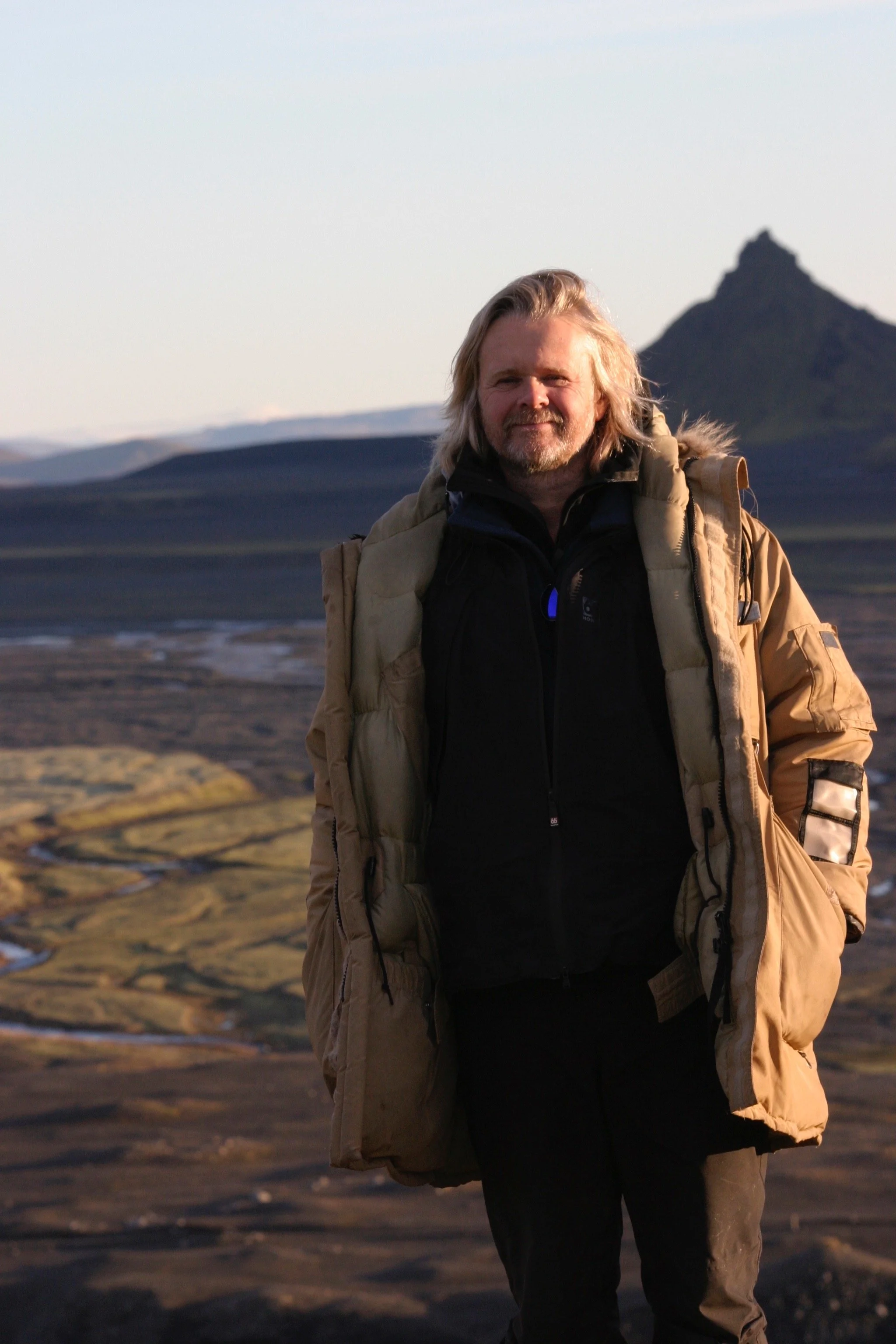
Sturla Gunnarsson
Director, Producer
1951 -
Iceland | Vancouver | Toronto
Sturla Gunnarsson is one of Canada’s most versatile and honoured film directors and producers. His career spans four decades and includes television, film and documentaries. His work has been Oscar-nominated and won Emmy, Gemini and Genie awards. In 2022, Sturla received the Directors Guild of Canada’s Lifetime Achievement Award. In October 2025, a special free, fortieth anniversary screening of the documentary, Final Offer, was co-presented by Unifor, Hot Docs, the Ageless International Film Festival, and the National Film Board of Canada in recognition of it being “one of the most consequential documentaries in Canadian labour history”. Final Offer, when released in 1985, received the top award at the Banff International Film Festival for Best Social and Political Documentary. It had already won a Genie and been nominated as Best T.V. Show Actra award. The film is about the Canadian auto workers strike against the American giant corporation, General Motors, and is acknowledged as being seminal in the founding of the Canadian Auto Workers Union. At 34 years old, Sturla had already established a solid reputation as a director and producer of films that have a social impact, as well as being formative of a Canadian national identity. Over the years his accomplishments have included include popular television series like Street Legal, Degrassi and Schitt’s Creek; television movies like 100 Days in the Jungle, Ricky Nelson-Original Teen Idol, Mother Trucker and The Diary of Evelyn Lau; feature films like Rare Birds, Ice Soldiers and Beowulf & Grendel; and more award-winning documentary films like Air India 182, Gerrie & Louise, After the Axe and Force of Nature, which is about David Suzuki. Gunnarsson’s work spans genres, styles, and continents, reflecting a deep commitment to authentic storytelling and a passion for exploring complex human issues through the lens of cinema.
Early Family History and Icelandic Roots
Sturla Gunnarsson’s formative years were shaped by his Icelandic roots and his family’s sense of adventure and resilience. Sturla was born in Reykjavik in 1951 and moved to Canada with his family when he was 7 years old. His mother, Ásthildur Jóna Tómasdóttir (known as Asta), was also born in Reykjavik to Maria Emilsdóttir and Tómas Ólasson, who were themselves true adventurers. Near the end of the Second World War, they made the bold decision to join a convoy of ships bound for New York, taking along their children, Asta and Torfi. Growing up, Sturla heard harrowing tales of ships on the periphery of the convoy being torpedoed by German U-boats. While the family made it safely to New York, the ship they originally travelled on, the Goðafoss, was tragically torpedoed and sunk on its return journey. Sturla’s mother, Asta returned to Iceland two years later, when she was 16 years old, and Sturla wrote, ‘her adult life began then.’ She married the love of her life, Snorri Rögnvaldur Gunnarsson in 1949. When Iceland was struggling through a post-war economic slump, Asta and Snorri decided to emigrate to Canada where ‘[there is the] freedom to become whatever you could make of yourself.’ Drawn by the natural beauty of the mountains and the sea, the family settled in Vancouver but kept close ties with Iceland, especially with Asta’s brother Torfi. They were a close-knit family, often spending time together, sailing on the Salish Sea and travelling abroad. When Snorri became ill with cancer, they had the courage ‘to pick up sticks’, sell their home, give away their belongings, and pursue their dreams: moving to live in England, taking up painting and spending time with friends. Their priority was experiencing life. Asta took pride in her Icelandic heritage, and she was equally proud of being Canadian. These were the values they instilled in their son. In an article, Sturla once said that he sees Canada as his country, but Iceland as his homeland. [W]hatever tribal feelings I have, are Icelandic. My deepest dreams are in Icelandic. It’s very much a part of my psyche, who I am.” In this 1992 interview for The Icelandic Canadian, Sturla went on to say he would like to return to Iceland to make a film. He got his wish when, in 2014, he went to Iceland to film Beowulf and Grendel.
Education and Early Adventures
Sturla graduated from the University of British Columbia in 1974 with a Bachelor of Arts in English Literature. This background in literature would later infuse his films with depth, narrative sophistication, and a critical perspective on society. Sturla subsequently earned a post-graduate degree in film production from UBC in 1977. Following his first university studies, Sturla embarked on extensive travels throughout Europe. His journeys were not only a wanderlust for adventure, but a search for experiences. He took on working a variety of jobs and immersing himself in diverse lifestyles. He became a shepherd on the island of Crete, a construction worker in the Shetland Islands, and returned to his Icelandic roots by working as a fisherman in the Icelandic village of Stokkeyri - a rite of passage and a deeply elemental experience that connected him to his family’s traditions. These formative years broadened his outlook and exposed him to diverse cultures, struggles, stories and themes that would later appear in his films.
Early Success and Films that Challenge the Audience
Sturla’s first documentary film, A Day Much Like the Others, released in 1979, established the filmmaker as an emerging voice in Canadian cinema, recognized for his thoughtful storytelling and compelling documentary work. He won the prestigious Norman McLaren Award at the Canadian Student Film Festival, marking a significant early achievement. The film’s impact extended internationally, earning the Special Jury Prize at the Rencontres Henri Langlois in Paris, and securing special screenings at the Museum of Modern Art in New York and at Filmex in Los Angeles. Following the success of his first film, Sturla’s growing reputation caught the attention of the National Film Board, which financed his documentary, After the Axe, released in 1983. This narrative focused on a middle-aged executive facing termination and the management consultant hired to do the job. Its sensitive, realistic portrayal of the complexities and emotional toll of corporate downsizing resonated with audiences and critics alike. The film went on to receive an Oscar nomination, further cementing the young director’s status as a significant figure in documentary filmmaking.
Continuing his commitment to films with a social conscience, the director filmed Final Offer, which brought the struggles and negotiations of organized labour to the forefront of public discourse, demonstrating the power of film to shape social and political realities in Canada. As mentioned, the 40th anniversary celebration of Final Offer was a testament to how relevant the film still is today in the struggles of Canada, culturally and economically, with its relationship to our powerful neighbour to the south.
By this time, Sturla had established an international reputation for artistically exploring complex social issues. It isn’t surprising then, that, in 1997, he went to South Africa to film the Truth and Reconciliation process. The film, Gerrie & Louise, brought the complicated emotional reality of post-apartheid life alive through a personal human lens. Gerrie & Louise depicts the unlikely marriage between a former apartheid hit-squad commander and the investigative reporter who exposed him. The film won the prestigious 1998 International Emmy Award for Best Feature Documentary.
Sturla’s deep commitment to producing documentaries that provoke deep reflection and drive social change was nowhere more evident than in the making of Diplomatic Immunity (1991). Sturla, and his partner, Steve Lucas, spent over ten years working to bring this documentary to the screen. Diplomatic Immunity offers a sharp dissection of the moral ambiguity surrounding Canada’s foreign aid programs. It follows the story of a Canadian foreign aid officer assigned to El Salvador, who witnesses the misappropriation of aid funds and has to make difficult choices around whether the aid programs should continue or not. Diplomatic Immunity critically examines the Canadian “do-good” mentality and exposes how good intentions can become problematic when faced with real-world ethical dilemmas. Sturla and Lucas’s willingness to incur significant personal debt to ensure its production, and years of ‘slogging it around the festival circuit’ to promote it, underscores Sturla’s dedication to producing thought-provoking, socially relevant cinema.
Some years later, Sturla again demonstrated an unwavering commitment to tackling difficult subjects in creating the documentary film, Air India 182. Co-produced with his wife, Judy Koonar, the film premiered at the Toronto Hot Docs Festival in 2008. Sturla aimed to humanize the devastating impact of the 1985 Air India bombing, which resulted in the deaths of 329 people, most of whom were South Asian Canadians. Despite the enormity of the tragedy, Sturla observed that the loss seemed to have little effect on the collective Canadian psyche (compare this to the emotional reaction to 9/11). He noted that, although the Canadian government produced numerous investigations and reports, none managed to convey a clear or complete narrative, nor did they capture the profound sorrow of the tragedy. The predominant perception seemed to be that this was a tragedy solely for the South Asian community, not for Canada as a whole. The question is, would it have occupied more prominence in the Canadian discourse if those who died were ‘white’? Sturla wanted to create a documentary that would allow the general public to connect emotionally to what was described by a 2010 judicial public inquiry as “the largest mass murder in Canadian history.” Through the film Air India 182, Sturla sought to bring greater attention to the story, encouraging Canadians to reflect more deeply on its significance and the broader issues of inclusion, recognition, and collective mourning. The film won the 2008 Directors Guild of Canada Alan King Award for Best Documentary.
Nature’s Grandeur
Perhaps inspired by his childhood experiences in beautiful British Columbia, with the majesty of its mountains and sea, Sturla was also drawn to express his awe of nature in film. His keen eye for capturing the raw beauty of nature has resonated with audiences around the globe and served as a background to compelling narratives about people’s interactions with the environment. Sturla’s documentary, titled Force of Nature, elegantly explored Suzuki’s life and his tireless advocacy for the planet, blending intimate personal insights with stunning visuals of nature’s grandeur. Pressing environmental issues are conveyed with emotional intensity. Force of Nature won the People’s Choice Documentary Award at the Toronto International Film Festival in 2010. In 2015, Sturla’s documentary/drama Monsoon offered a breathtaking, beautifully filmed journey following the monsoon rains as they moved across India, from the southern state of Kerala to the northeast state of Meghalaya. The film, Monsoon, captures both the awe-inspiring power of nature and the profound ways in which it shapes the lives of millions of people. The result is a poetic meditation on the interdependence of people and the environment. Monsoon won the Top Ten Audience Choice Award in 2015, further cementing Gunnarsson’s reputation for excellence in environmental filmmaking. After the tragic and untimely death of the young environmentalist and filmmaker, Rob Stewart in 2018, Gunnarsson, along with Nick Hector, completed Stewart’s documentary Sharkwater Extinction. Sturla’s role in bringing this project to fruition underscores his commitment to environmental causes and his respect for fellow filmmakers.
Television Series and Feature Films
While pursuing his passion for socially significant filmmaking, Gunnarsson also found success in directing and producing seminal Canadian television dramas. Demonstrating the same degree of excellence that marked his cinematic endeavours, he directed popular TV series such as ENG and Street Legal, supporting himself as he continued to make movies. His television credits expanded to include The Beachcombers, as well as the critically lauded Da Vinci’s Inquest and the globally popular CBC and Pop TV sitcom Schitt’s Creek. His work on North of 60 (1993), Intelligence (2006), and Degrassi: The Next Generation (2008–2011) further cemented his reputation for excellence.
In addition to these television series, Gunnarsson directed several acclaimed television movies. One notable feature film is Such a Long Journey (1998), set against the 1971 India-Pakistan conflict. Filmed in Bombay, the work was praised by British Film Review as a “modern masterpiece”—rich in atmosphere and seamlessly blending politics, religion, illness, and family upheaval with humour.” It was one of the top grossing Canadian films of 1999 and received 12 Canadian Academy Award nominations. Another notable film, The Diary of Evelyn Lau (1994) marked Sandra Oh’s stunning debut performance, which garnered her the Best Actress Award at the Cannes Television Festival. Other notable works include Scorn (2000) and 100 Days in the Jungle (2002), both of which won Canadian Academy Gemini Awards for Best TV Movie. He also directed the CBS classic, The Man Who Saved Christmas (2002). Of great interest to us, though, is Sturla’s epic fantasy film, Beowulf and Grendel. Sturla’s path in cinema was marked by a desire to bridge cultures and histories. After establishing himself in the Canadian film industry, he looked for a project that could intertwine his Icelandic roots with his adopted English Canadian home.
Beowulf - Bridge between Canada and Iceland
In 2004, Lögberg-Heimskringla featured an interview with Sturla Gunnarsson on the filming of the Anglo-Saxon classical poem, Beowulf. The author of the article, ‘Where Two Cultures Meet’, David Fuller, placed Sturla at the crossroads of two worlds, with his film career shaped by both Canadian and Icelandic influences. As a filmmaker born in Iceland and raised in Canada, Sturla had navigated the complexities of a dual heritage. Reflecting on this blend, Sturla revealed in the interview, “I feel at home in both places but there’s a part of me that’s always searching for a connection to my roots. Canada gave me a voice, but Iceland gave me stories.” Sturla went on to say in the interview that “The epic poem Beowulf, with its mingling of Norse and Anglo-Saxon traditions, offered the perfect vessel for this exploration. Beowulf is the story where the Norse and Anglo-Saxon worlds collide... it’s a tale of borders and belonging, much like my own life.”
Sturla’s adaptation of Beowulf was motivated not only by his heritage but by a fascination with the poem’s role in shaping Western storytelling. He recognized Beowulf as “the moment when Viking sagas and English mythologies meet,” and sought to bring this convergence to life on film.
Sturla’s approach to filming Beowulf was deeply inspired by the Icelandic setting. He consciously chose to allow the natural raw intensity of Icelandic landscapes to set the dramatic stage. In the interview with Fuller, Sturla said: “There’s an elemental power in [the story of] Beowulf. It’s brutal, beautiful, and utterly human. By filming it in Iceland, I wanted to honour both the Norse roots and the universal themes of heroism and mortality. … Iceland is a land shaped by fire and ice—what better place to tell a story forged in myth?”
Rejecting the trend toward animated visual effects, Sturla insisted on using natural filming effects and real in-time acting to evoke the world of Beowulf. He believed that the authenticity of Iceland’s terrain would lend a visceral quality to the film, stating, “Filming here is like working with the earth itself. There’s a rawness, an honesty, that you just can’t replicate in a studio. … I wanted audiences to feel the wind and hear the crash of waves, not just see pixels on a screen.” This commitment to realism was extended to the entire production design, with on-location shoots capturing the harsh beauty of Iceland’s mountains, glaciers, and black sand beaches. “You can’t fake Iceland. The landscape becomes a character in the story.”
A Milestone in Icelandic Cinema
Sturla Gunnarsson’s Beowulf & Grendel stands as a landmark achievement in both Icelandic and Canadian filmmaking. Released in 2005 and filmed the previous year, it marked the first instance of a major international production being shot extensively in Iceland, a country whose unique landscapes had previously appeared only fleetingly in global cinema. Gunnarsson’s bold creative choice not only showcased the dramatic potential of Iceland’s cinematic vistas but also catalysed a new era for international co-productions in the country.
At the time of filming in 2004, Iceland was still an emerging presence on the international filmmaking stage. Most global audiences had only seen Iceland’s natural wonders in brief glimpses. Gunnarsson’s decision to anchor his adaptation of the epic Beowulf within Iceland’s wild and rugged terrain was transformative. The nation’s sweeping volcanic landscapes, moody skies, and dramatic coastlines became integral to the film’s atmosphere, demonstrating their value not just as backdrops but as active elements in cinematic storytelling.
Crucial to the success of Beowulf & Grendel was the support provided by the Icelandic Film Innovation Funds. As a pilot venture for international co-productions, the project benefitted from the Fund’s mandate to encourage experimentation and ambition. Sturla himself noted, “The Innovation Funds gave us the freedom to experiment, to take risks, and to dream bigger than ever before.” This support allowed the production to blend local Icelandic talent and resources with global storytelling techniques, setting a new standard for future collaborations. Most significant was the close partnerships forged with Icelandic cast, crew, and creative professionals. The production demonstrated the potential for blending local talent and resources with global storytelling ambitions. Gunnarsson described the project as “more than a film—it was a statement about what Icelandic cinema could be.” The collaborative spirit fostered during Beowulf & Grendel became a model for subsequent co-productions, establishing Iceland as a desirable location for filmmakers worldwide.
Leadership and Mentorship:
Sturla Gunnarsson is widely recognized for his influential leadership within the Canadian film industry. He served as the National President of the Directors Guild of Canada (DGC) from 2008 until 2014. In this role, Gunnarsson played a pivotal part in shaping the direction of Canadian filmmaking, advocating for directors’ interests, and championing the growth of creative talent across the country. His tenure marked a period of strategic development and increased visibility for Canadian directors, further establishing the DGC as a key institution within the industry.
Beyond his executive leadership, Gunnarsson demonstrated a deep commitment to nurturing aspiring filmmakers, especially within Indigenous communities. In 2007, Gunnarsson participated as a mentor in the National Screen Institute (NSI)’s "New Indigenous Voices" program. This part-time, online training initiative was designed to bolster the skills and abilities of emerging Indigenous filmmakers, helping them navigate the complexities of film production and storytelling. Gunnarsson’s involvement provided valuable guidance to students, supporting their creative growth and professional development. Continuing his commitment to talent development, Gunnarsson’s mentorship extended to the NSI "New Northern Voices" program, launched in 2022 for northern Manitoba residents. The program’s goal was to build skills in media storytelling, writing, and film production, with a strong emphasis on local northern narratives. By strengthening the abilities of new and emerging writers, the program contributed to a richer, more inclusive Canadian film landscape.
As National President of the DGC, he provided strategic vision and advocacy for Canadian directors. Through his teaching and mentorship—particularly in Indigenous and northern communities—he has played a crucial role in expanding opportunities for underrepresented voices and ensuring the Canadian film industry remains vibrant, diverse, and innovative.
Legacy
Sturla Gunnarsson is a Canadian filmmaker whose diverse body of work has left a lasting impact on the film industry in Canada and beyond. Through his innovative films, advocacy, and mentorship, Sturla Gunnarsson has ensured that his legacy endures. His impact is felt not only in the accolades he has received, but also in the opportunities that he has created for others and the meaningful stories that resonate with audiences around the world. Gunnarsson’s work has been recognized with numerous awards, including Genie nominations, international festival accolades, and an Academy Award nomination. His films are regularly cited as important contributions to Canadian cultural heritage.
One of Gunnarsson’s most significant contributions to Canada is his dedication to Canadian stories and voices. He directed films that highlighted the diversity of Canadian experiences, including stories of immigration, cultural identity, and challenges faced by minority groups. Beyond his work behind the camera, Gunnarsson has been a mentor to emerging filmmakers, often advocating for the importance of diverse voices in Canadian filmmaking. He has participated in panels, workshops, and educational initiatives, helping to shape the next generation of storytellers. His commitment to authentic storytelling and his support of emerging talent have helped to shape a more inclusive and dynamic film industry in Canada.
Gwen Sigrid Morgan
INLNA President 2025